
Why Overpricing Your Home Can Hurt Buyer Interest and Delay Your Sale

The wrong list price can cost more than time. It can cost attention, trust, and money.
A home priced too high often attracts fewer showings in the first week. That matters. Early activity is when buyer interest is strongest. If the price misses the market, the listing can go quiet fast.
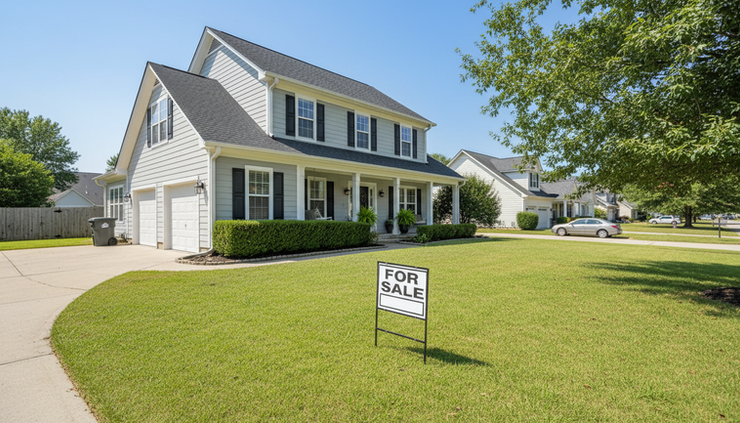
A high price shrinks the buyer pool
Buyers shop in price ranges. They set search filters. They compare homes. If a home is priced above similar properties, many buyers never see it or skip it.
For example, a buyer approved up to $500,000 may search from $450,000 to $500,000. If the home’s true market value is around $495,000 but it is listed at $525,000, that buyer may never find it.
Even if they do, the comparison is not kind. Buyers will look at other homes at $525,000. Those homes may have newer kitchens, larger lots, better finishes, or stronger locations.
That makes the overpriced home look weaker.
Common pricing benchmarks used in residential real estate show why this matters:
Pricing position | Common effect |
Priced at market value | Reaches the widest pool of qualified buyers |
Priced about 5% over market value | Can reduce showings and push buyers toward better-priced homes |
Priced about 10% over market value | May cut the likely buyer pool sharply, sometimes by half in agent pricing models |
Priced 15% or more over market value | Often attracts little serious activity unless inventory is very limited |
These are not fixed rules. Local supply, demand, condition, and mortgage rates matter. Still, the pattern is clear. The farther the price moves above market value, the fewer serious buyers will engage.
Market perception changes fast
Buyers notice stale listings. So do agents.
A new listing gets a burst of attention. Many real estate professionals track the first 7 to 14 days closely because that is when fresh listings tend to get the most views, saves, calls, and showing requests.
If a home sits with little activity, buyers start asking questions.
They may wonder:
Is something wrong with the property?
Why has no one bought it?
Will the seller be hard to negotiate with?
Is a price cut coming soon?
That last question can slow the sale even more. Some buyers will wait. They assume a reduction is coming. Others move on because they do not want to start with a seller who looks unrealistic.
This is one of the biggest dangers of overpricing your home. The home may be perfectly good, but the market begins to treat it as a problem.

Overpricing can lead to longer market time and lower offers
Longer time on market can weaken a seller’s position.
Buyers often use days on market as a negotiation tool. If a home has been listed for 45, 60, or 90 days, they may feel less pressure to make a strong offer. They may also ask for more concessions.
That can include:
A lower purchase price
Seller-paid closing costs
Repairs after inspection
A longer contingency period
Credits for updates
Price reductions can help renew interest, but they do not erase the early loss of momentum.
A common pattern looks like this:
Stage | What often happens |
Week 1 | Listing gets views but few showings because the price is high |
Weeks 2 to 4 | Buyer interest slows and agents question the price |
Days 30 to 45 | Seller considers a price cut |
After reduction | New buyers look, but some wonder why the home sat |
Offer stage | Buyers may negotiate harder due to longer market time |
Many agents caution that a home which sits past the average days on market for its area may need a larger adjustment than it would have needed at the start. A small cut may not be enough if buyers already see the listing as stale.
A home priced right from the start often has a better chance of creating urgency than one that needs multiple reductions later.
This is why “testing the market” with a high price can backfire. The market gives feedback quickly. If the price is too high, the feedback is usually silence.
A competitive price starts with real comparable sales
A competitive price is not a guess. It should be based on recent sales, current competition, and the home’s condition.
Start with comparable sales, often called comps. These are homes that are similar in ways buyers care about.
Look for homes with similar:
Location
Square footage
Lot size
Age
Number of bedrooms and bathrooms
Condition
Updates
School district or neighborhood features
Garage, basement, pool, or outdoor space
Use sold homes first. Active listings show the competition, but sold homes show what buyers were willing to pay.
Pending sales can also help, if price information is available. They show where current buyer demand may be landing.
Do not rely only on automated home value estimates. They can be useful as a starting point, but they often miss key details. They may not know about a dated roof, a remodeled kitchen, a busy road, or a premium lot.

How to set a price that attracts serious buyers
The goal is not to underprice the home. The goal is to price it where buyers see value and feel a reason to act.
Use these steps before listing.
Study the last 3 to 6 months of sales
Recent sales matter most. In a fast-moving market, older sales may no longer reflect current demand. Compare final sale prices, not just list prices.
Check the active competition
Buyers will compare your home against what is available now. If three similar homes are priced lower, your home needs a clear reason to be higher.
Adjust for condition
Updates matter, but not every improvement returns dollar for dollar. A new roof, fresh paint, clean flooring, and strong curb appeal can help. Overly personal upgrades may not raise value as much as expected.
Watch price brackets
Search filters matter. Pricing at $499,900 instead of $505,000 can place a home in front of more buyers. Small changes can affect visibility.
Get professional input
A real estate professional can prepare a comparative market analysis and explain how buyers are reacting in the current market. An appraiser can also provide an independent opinion of value.
This article is for general information only. Real estate pricing decisions should account for local market data and professional advice.
FAQ
Is it better to price high and negotiate down?
Usually, no. A high price can reduce showings before negotiation ever starts. A realistic price often creates more interest and stronger offers.
How soon should a seller reduce the price?
If there are few showings and no serious offers in the first few weeks, review the price. The right timing depends on local days on market and buyer activity.
Can a hot market support overpricing?
A strong market can forgive small pricing mistakes. It rarely supports a price far above comparable sales unless the home has rare features or very limited competition.
Do online estimates give an accurate list price?
They can help, but they are not enough. Online tools may miss condition, upgrades, location issues, and buyer demand.

Price with the market, not wishful thinking
The right price protects buyer interest. It also protects the seller’s negotiating position.
Overpricing can lead to fewer showings, longer time on the market, price reductions, and lower offers. A competitive price does the opposite. It gets the home seen by the right buyers while the listing is fresh.
If you are preparing to sell and want help reading the market, contact Luanne Webb Real Estate for pricing guidance before you list.


Comments